
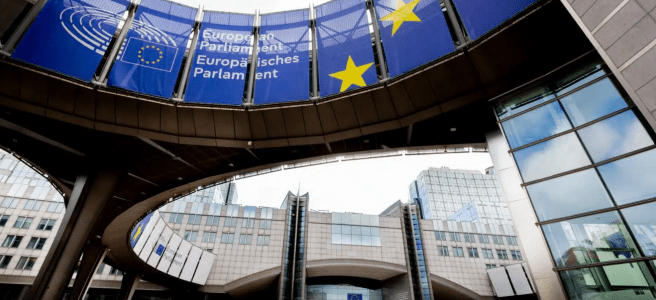
The hearing of the organizers of the abortion initiative “My Voice, My Choice” was carefully choreographed by the relevant committee chairpersons, all of whom belong to the left-wing and extreme left-wing political spectrum, so that dissenting voices would get as little airtime as possible. The organizers of the initiative were given ample speaking time (which is justified in itself), but the speaking time allocated to parliamentarians was also distributed extremely unevenly so that the initiators of the initiative and Commissioner Hadja Lahbib, who was extremely uncritical of them, would not be confronted with critical questions.
In such an arrangement, which was more reminiscent of a party conference of the abortion lobby than a serious parliamentary hearing, and which raises fundamental doubts about the democratic maturity of the European Parliament, it is precisely the critical objections that deserve attention.
The abortion-supporters were certainly not happy to be reminded that the strongest European Citizens’ Initiative in EU history is not “My Voice, My Choiv-ce”, but ONE OF US, as highlighted by MEP Paolo Inselvini (ECR, Italy), who noted that “no other initiative has ever mobilised citizens as powerfully as ONE OF US.”
Then, throughout the hearing, MEPs emphasised the initiative’s incompatibility with the EU Treaties. Luxembourg MEP Fernand Kartheiser reminded that “the EU Treaties uphold the right to life”, warning that “if the European Commission were to follow up on “My Voice My Choice”, it would directly violate EU law.” Croatian EPP MEP Tomislav Sokol added that abortion “is not a human right”, noting that “no international treaty recognises abortion as a right, therefore it cannot be funded by the European Union.” Their interventions underscored that shifting abortion into EU competences would directly undermine the principle of subsidiarity and disregard Member States’ sovereign authority in sensitive ethical matters.
Several MEPs stressed that the “MVMC”My Voice, My Choice” proposal risks creating a mechanism that wil undermine Member States whose laws protect unborn life or provide strong maternity policies. Slovenian EPP MEP Matej
Tonin as well as Slovakian MEP Miriam Lexmann both warned that “EU-level financial mechanisms must not undermine Member States”, insisting that “subsidiarity is a safeguard for democratic self-determination.” French ECR MEP Laurence Trochu similarly stated that the ECI’s demand for EU-funded abortion tourism “clearly exceeds EU competences and violates the Member States’ sovereign authority.”
Concerns were also raised regarding the motivations and financing behind the pro -abortion campaign. Italian
ECR MEP Paolo Inselvini insisted that “abortion has to remain a national competence” and questioned whether the initiative genuinely reflects the will of EU citziens or “whether it is coming from elsewhere.”
Spanish PfE MEP Margarita de la Pisa added that the pro-abortion initiative “is financed by organisations
that provide abortion on a commercial basis, such as Planned Parenthood”, while recalling that “women’s rights also include the protection of maternity.” She urged the organisers “not to attack those who support motherhood.”
Building on these concerns, EPP MEP Peter Agius from Malta raised pressing issues of rule of law and democracy, asking: “How could we explain to the Maltese people that their will would be circumvented by the EU?”
Likewise, even Polish MEP Mirosława Nykiel, who otherwise shares the initiative’s views on abortion, criticised
the initiative’s lack of financial transparency. She also condemned the organisers’ portrayal of EPP MEPs as extremists simply for not aligning with their positions, as well as the pressure placed on MEPs to withhold dissenting opinions.
ONE OF US recalls that the proposal would not only undermine the EU treaties and the right to life but would also facilitate disability-selective abortion across borders, reinforcing eugenic practices and contradicting Article 21 of the EU Charter of Fundamental Rights, which prohibits discrimination on the grounds of disability. These concerns are real if the EU would inadvertently create mechanisms that deepen inequalities and harm the most vulnerable.
Women across Europe are increasingly asking for better maternity support, not for EU-funded abortion mechanisms. Genuine women’s rights require concrete social measures—financial support, medical care, childcare structures, and workplace protection—rather than encouraging the export of abortion across borders.
ONE OF US’ President, Pr Tonio Borg, reaffirmed the organisation’s commitment to defending EU law and democratic principles. He stated: “Today’s hearing was marked by strong ideological claims, but ideology can never override the EU Treaties. The European Commission must respect the limits of EU competences. The Treaties are clear: matters of life lie with the Member States, not Brussels.”
ONE OF US therefore calls on European institutions to firmly reject the proposals put forward by the “My Voice, My Choice” initiative to uphold the Treaties, protect the principle of subsidiarity, and respect the democratic authority of Member States. The EU must prioritise policies that provide real support to women during pregnancy, protect persons with disabilities, and defend human dignity at every stage of life.
 one-of-us.org