
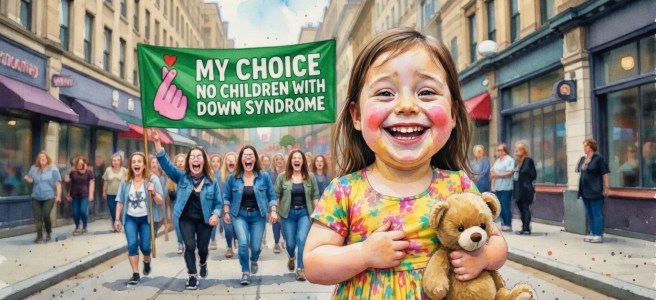
The statistics are remarkable.
- 99% of those surveyed are happy with their lives.
- 97% answered yes to the question, “Do you like who you are?”
- 99% agreed with the statement, “Do you love your family?”
Do you know of any group of people, of any economic status, educational level, age, ethnicity, or geographic region that approaches those percentages? Who are these happy people?
People living with Down syndrome.
Bert-Jan Ruissen, a Dutch MEP from the unapologetically pro-life Staatkundig Gereformeerde Partij (SGP), has submitted a series of written questions to the Commission in connection with the Commission’s legally dubious announcement that it intends to make European Social Fund resources available to finance abortions in future. One of these is particularly significant, as it specifically concerns the rights and status of people with disabilities:
“In certain Member States, including France, pregnancy may be legally terminated until the end of the pregnancy in the event of a diagnosis of Down’s syndrome. How does the Commission ensure, in the context of the EU’s obligations under the UN Convention on the Rights of Persons with Disabilities and Articles 10, 21 and 26 of the Charter of Fundamental Rights, that this funding does not contribute directly or indirectly to discriminatory practices on the grounds of disability?”
Indeed, it is shocking to think that money from the social fund, which is supposed to finance social inclusion, could now be used to specifically identify and kill children with Down syndrome. It is hard to imagine a worse form of discrimination against disabled people and a more flagrant violation of their rights.
People with Down syndrome do have a disability that makes it difficult for them to live independently, and their life expectancy is shorter on average than that of other people, but they can still lead long and happy lives. Legislation in countries such as France, which permits abortion until just before birth, claims to want to spare these children a life of suffering. In reality, however, it is about the interests of the rest of society, which does not want to have to deal with the needs of these children.
 one-of-us.org